Solora Technologies
Solora Technologies is an environmental innovation company dedicated to helping communities, industries, and global partners transition toward a more sustainable future.
The company operates across five core areas: waste-to-resource solutions, clean energy development, environmental data and intelligence, technology transfer and integration, and regulatory support. Through these services, Solora helps municipalities, waste managers, investors, and international tech providers adopt better technology, meet environmental standards, and navigate complex regulations.
Overview
The company is exploring a redesign of its current WordPress website by developing a comprehensive UX/UI prototype optimized for all major browsers and mobile devices. The project involves conducting background research on the existing site and identifying key areas where a redesign could have the greatest impact. It also includes creating a screen-by-screen prototype and conducting UX/UI testing with potential users, using methods such as paper prototypes or digital tools, to gather actionable feedback and implement innovative, user-focused design solutions.
Team
Jay Shim (UI/UX Designer)
Laura Pang (UX Designer)
Torrie Real (UX Designer)
Umama Ayaz (UI Designer)
Timeline
5 weeks

Understanding the client needs
During our first week in the design phase, we were there to listen on their wants and needs in order for us to align on goals, scope, and priorities. We requested for all supporting documents for review. This informed our approach and guided us in identifying relevant competitors and developing personas.
Qualitative Analysis
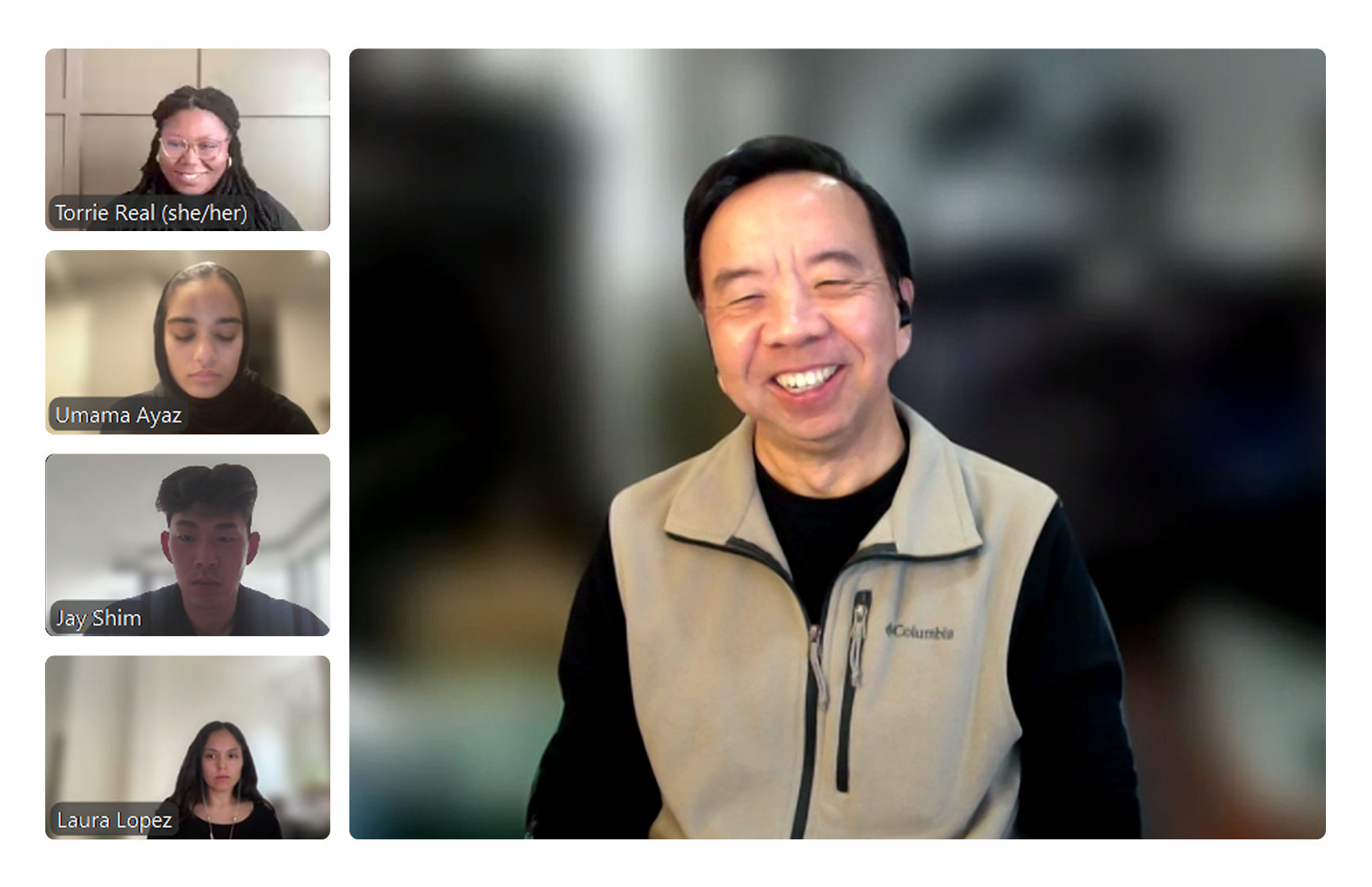
After synthesizing all documents handed by the client, we still wanted to hear from them explain what Solora Technology does. We prepared a set of questions to ask the client to uncover any areas of uncertainty. Some things we wanted to understand were,
Who founded the company, and what inspired its creation?
How did the company get started and evolve?
Can you walk us through the steps a prospect goes through before becoming a client?
Are you operating globally, nationally, or regionally?
How would you describe Solora Technologies’ mission and the value you want visitors to immediately understand when they land on the homepage?
What differentiates your company within the waste-to-energy and environmental technology space?
If you could choose three words to describe your brand personality, what would they be?
Understanding the audience
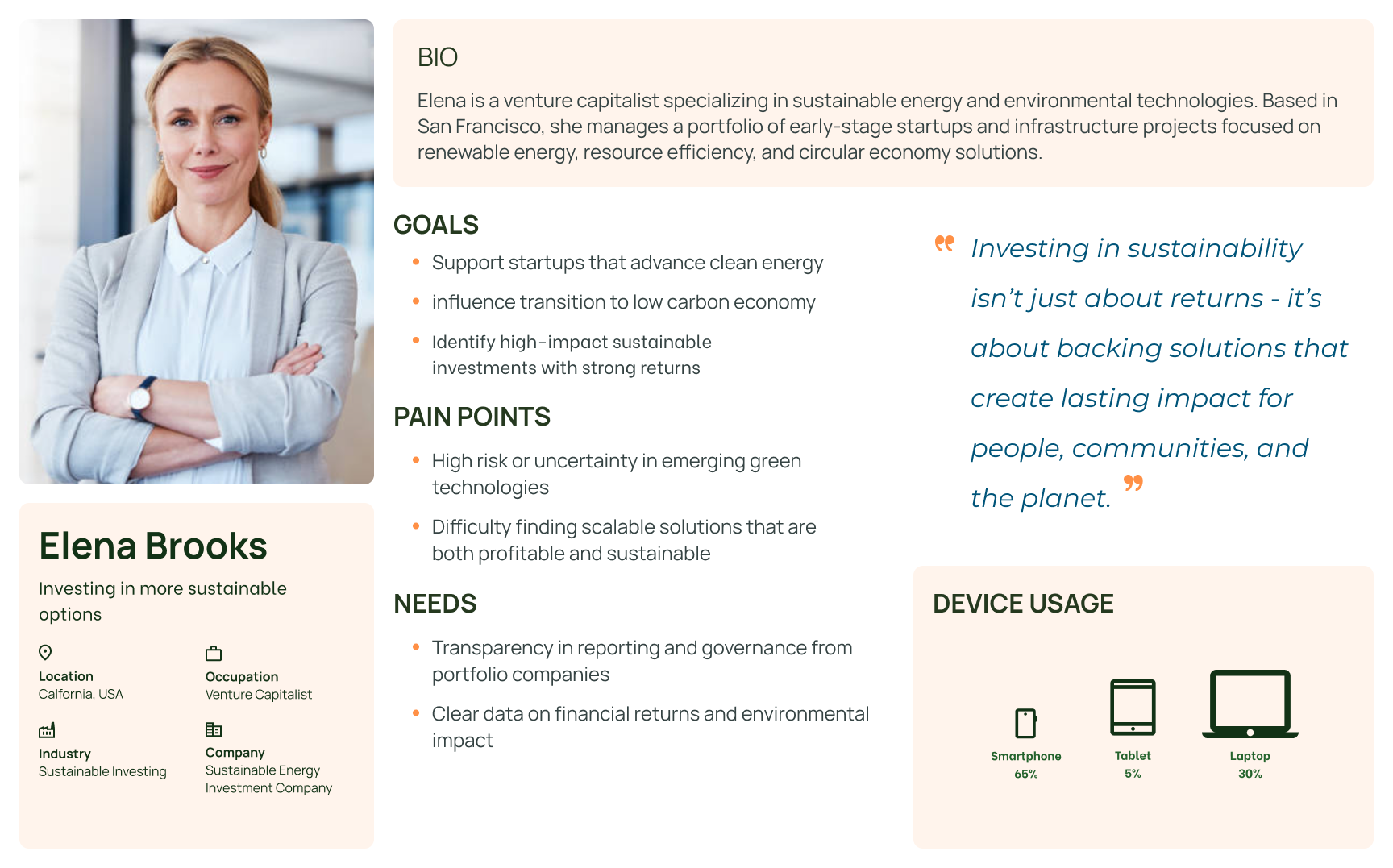
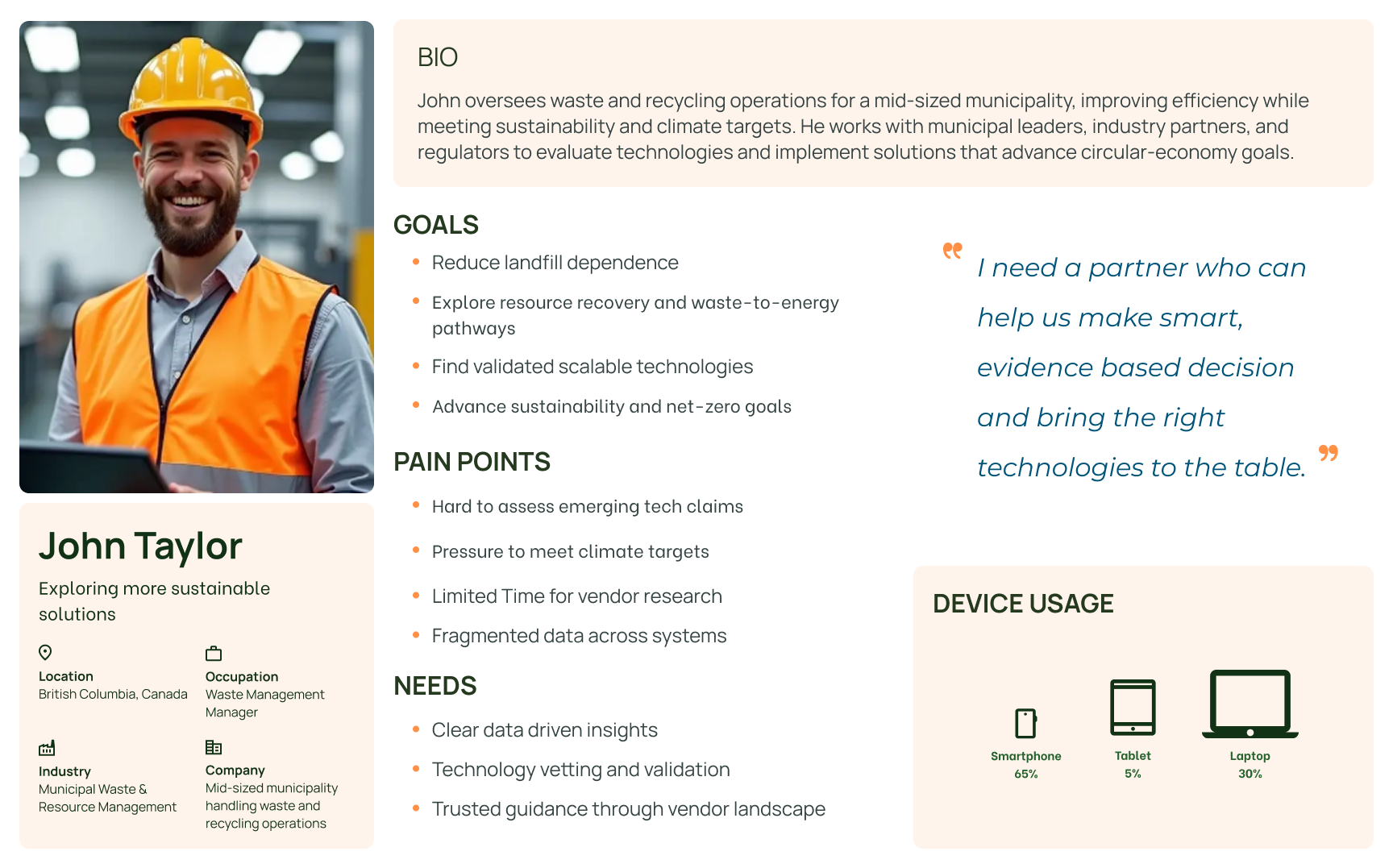
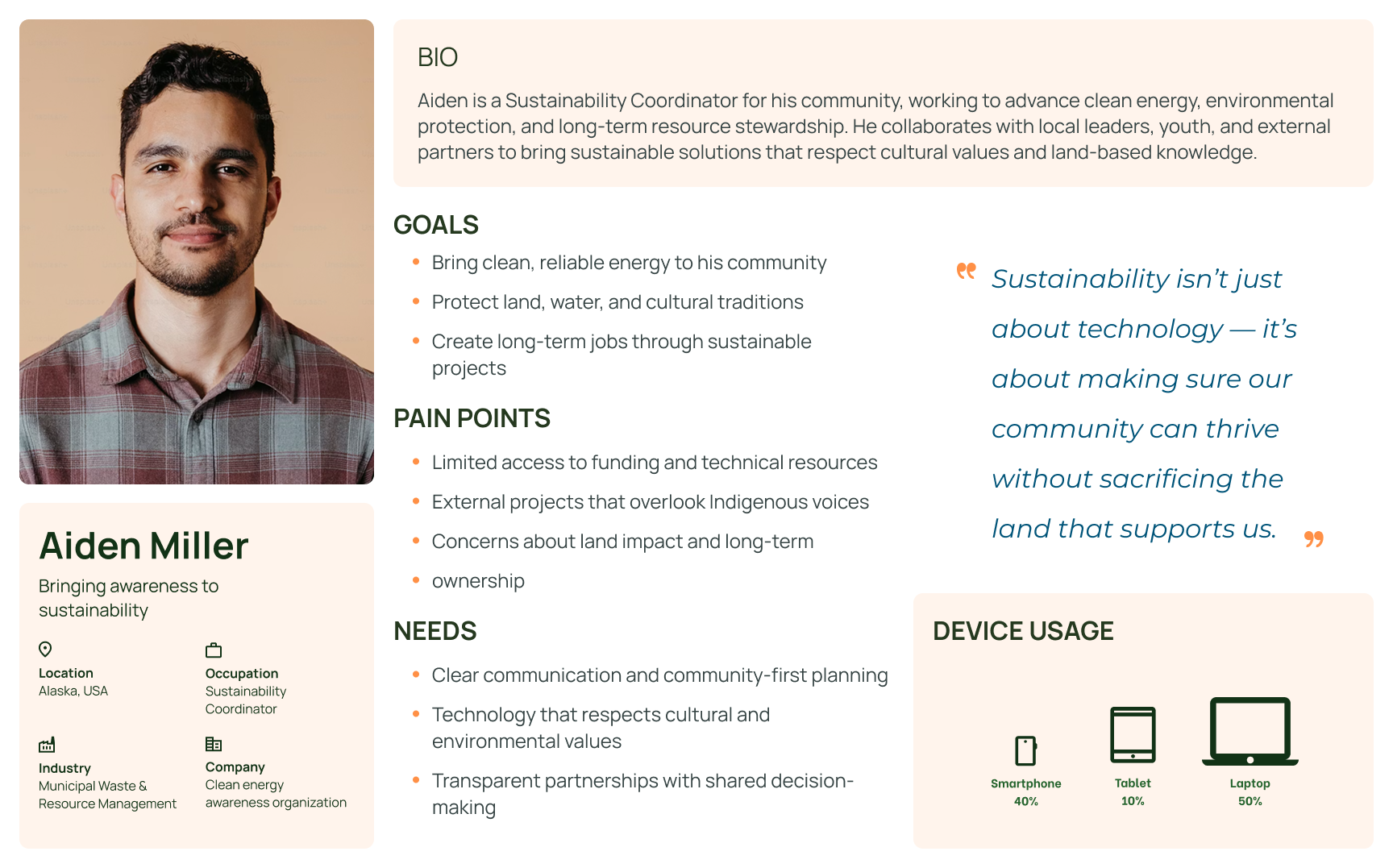
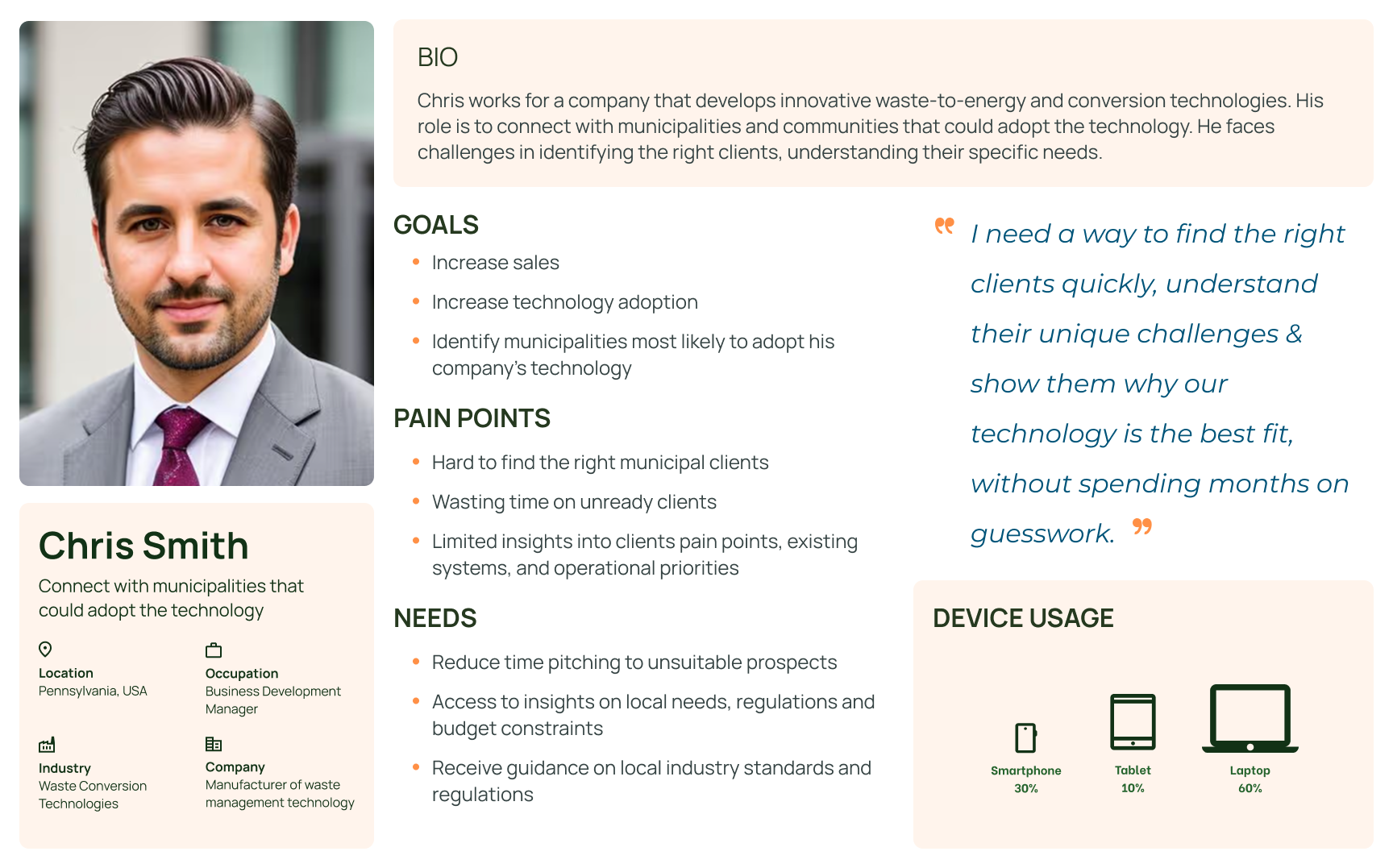
After receiving clarifications to our questions, we created 4 personas to guide our team to design a site structure that meets prospective clients where they are in their journey. By understanding Solora Technologies’ audience goals, challenges, and decision-making needs, we can create clear pathways and relevant content that guide users naturally toward Solora’s solutions.
These 4 personas reflect the audience Solora Technologies would be targeting

User Journey Mapping
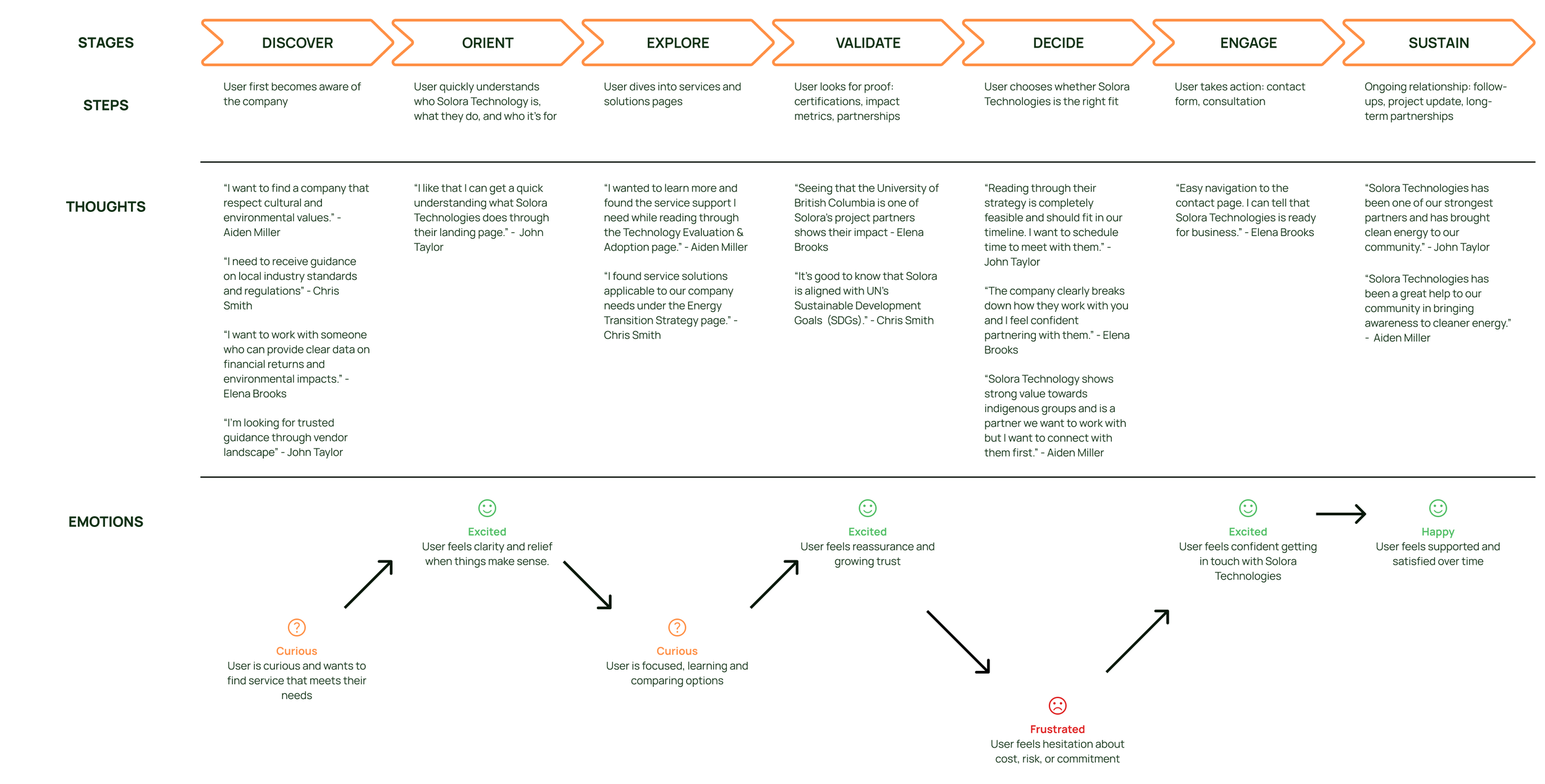
By outlining the steps a user takes on the site map, we created and shared a user journey map that highlights their actions and some of their emotions they may experience at each stage. This helped the client understand where users feel confident, confused, or disengaged, guiding towards informed design decisions that improve user experience.
Competitive Benchmarking
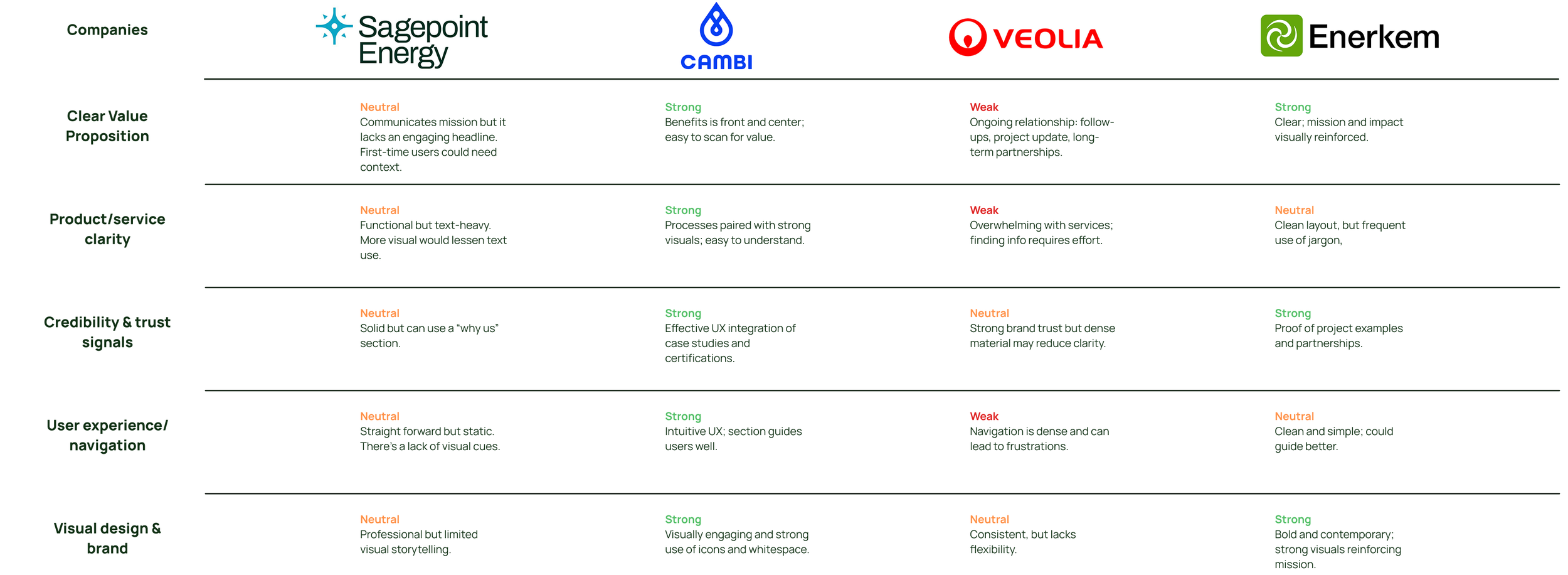
We evaluated UX, design and clarity across four direct competitors — Sagepoint Energy, Cambi, Veolia, and Enerkem. Cambi and Enerkem scored the highest, while Veolia and Sagepoint show needed improvements in navigating and visual engagements. These insights helped guide the team to prioritize usability and brand recognitition.
Site Mapping
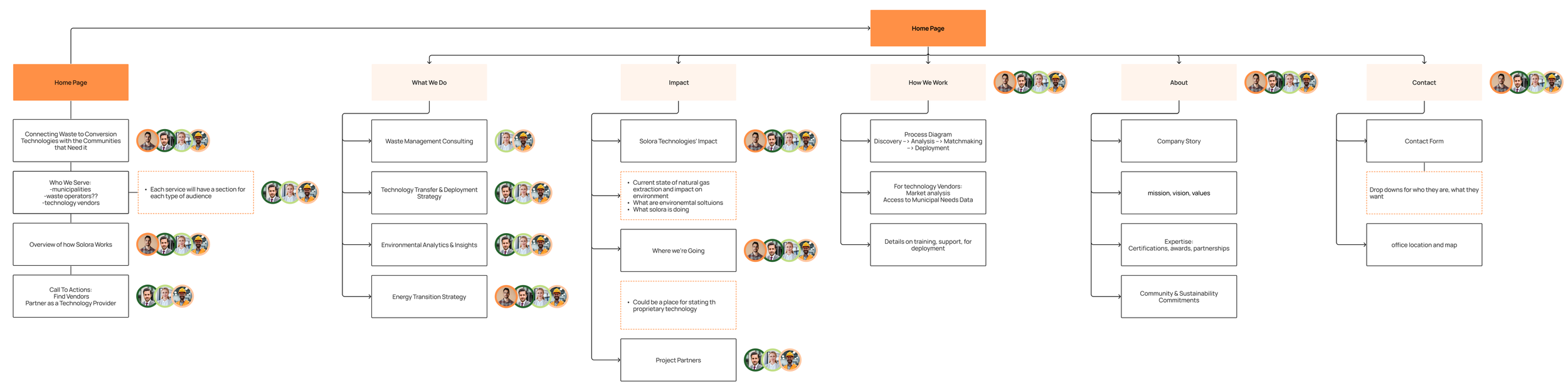
Using our 4 personas as a guide, we created a site map and organized all client-provided documents onto the pages most relevant to each persona. This helped the client understand the website’s overall information architecture.

Low Fidelity Prototyping
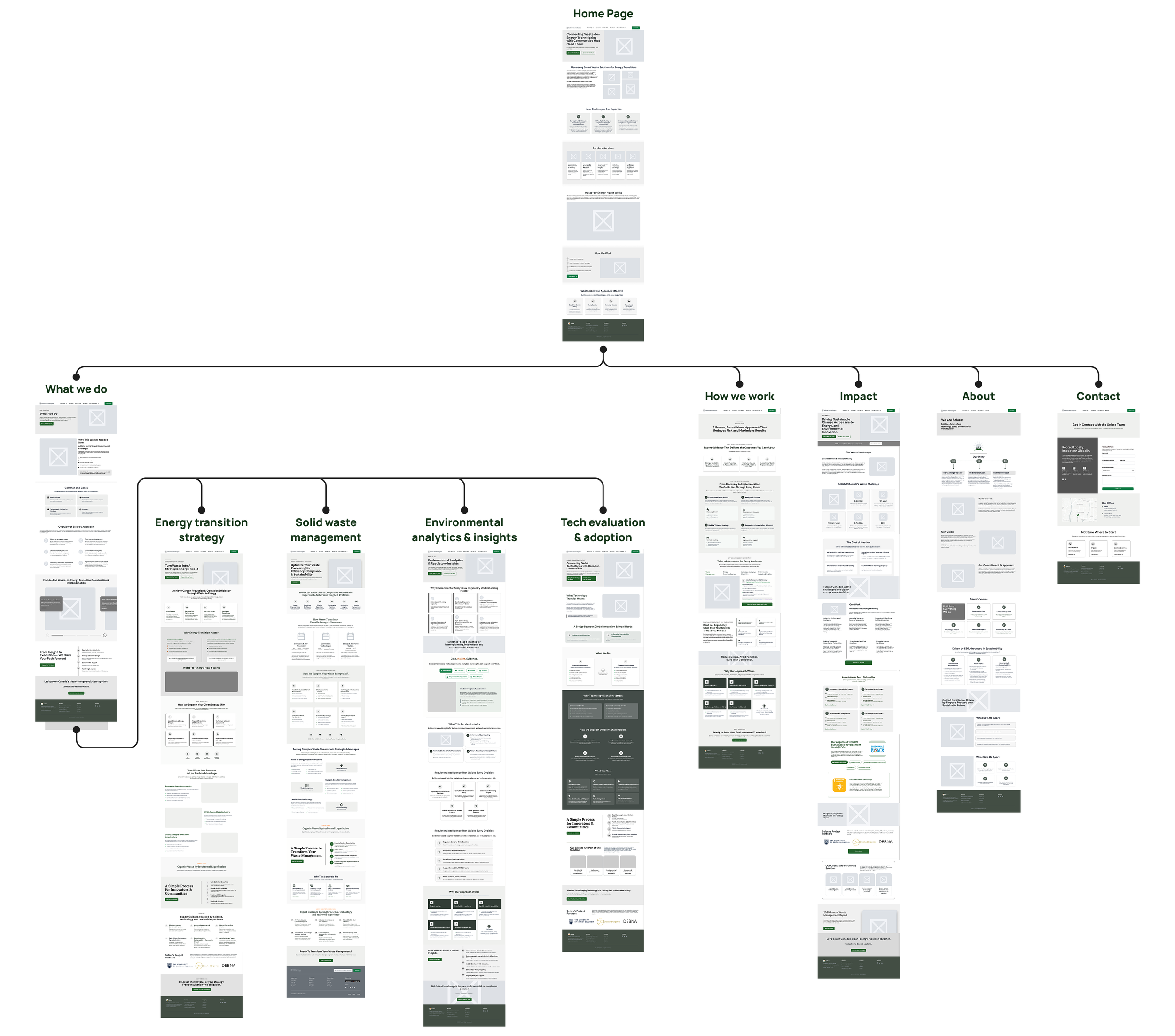
We were well equipped to move into the design phase and create a low fidelity prototype. We returned to our personas and presented the journey that each persona would take to further validate the overall structure and flow of the website.
Low Fidelity User Testing
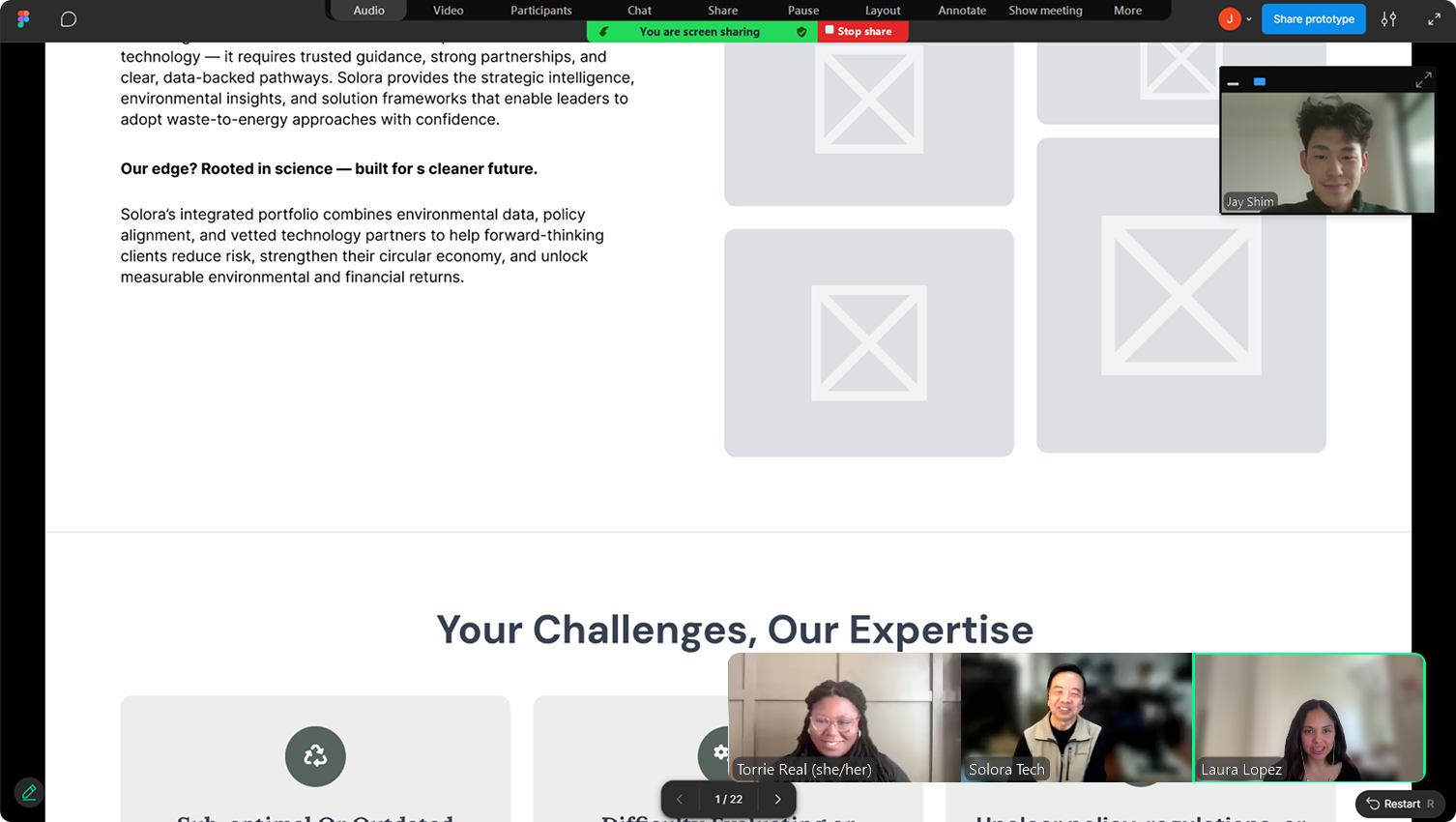
We conducted A/B testing with the client and an additional participant to compare variations of the site structure. This process helped validate design decisions, surface usability preferences, and provided clear, actionable feedback that guided refinements toward a more confident and user-aligned final solution.
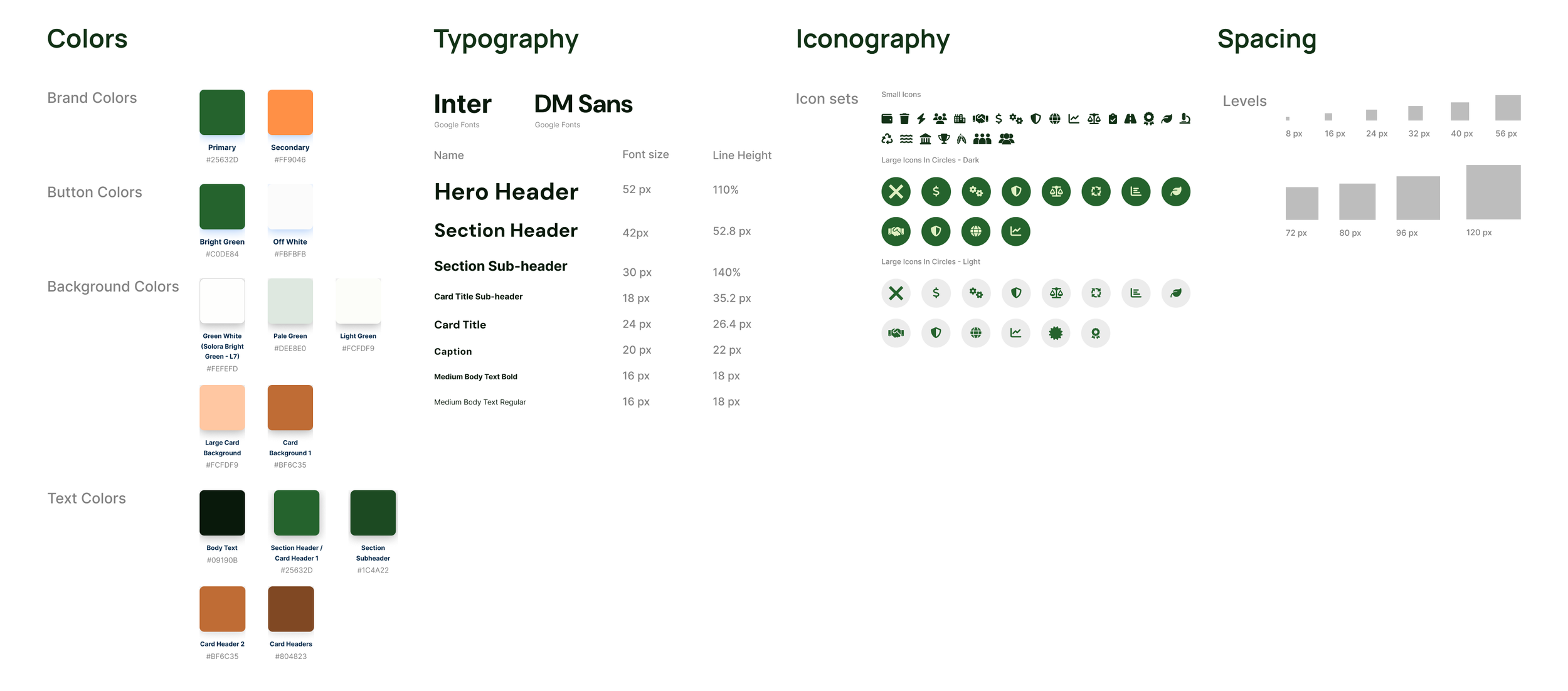
Design System
Established a design system including colors, typography, sizes, icons, and illustrations for sustainable app maintenance and development.

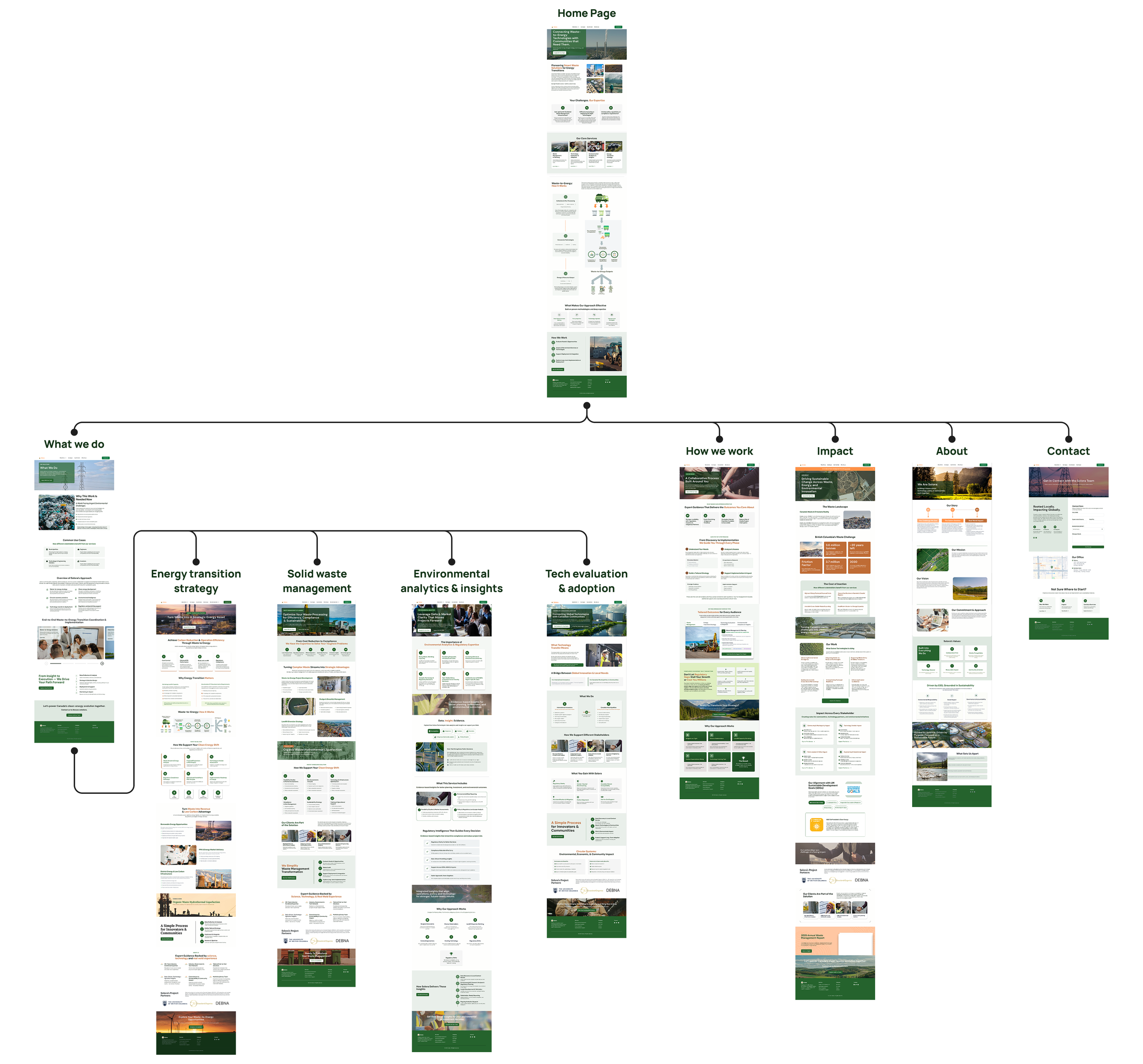
High Fidelity Prototype
Once we established our design system and receiving approval from the client for the low-fidelity prototype, we completed all high-fidelity pages.
Validating our Design
We tested our high fidelity prototype with 2 participants and was able to refine the way the wanted it. In each section, we uncovered many things and added highlights on how we organized each section.
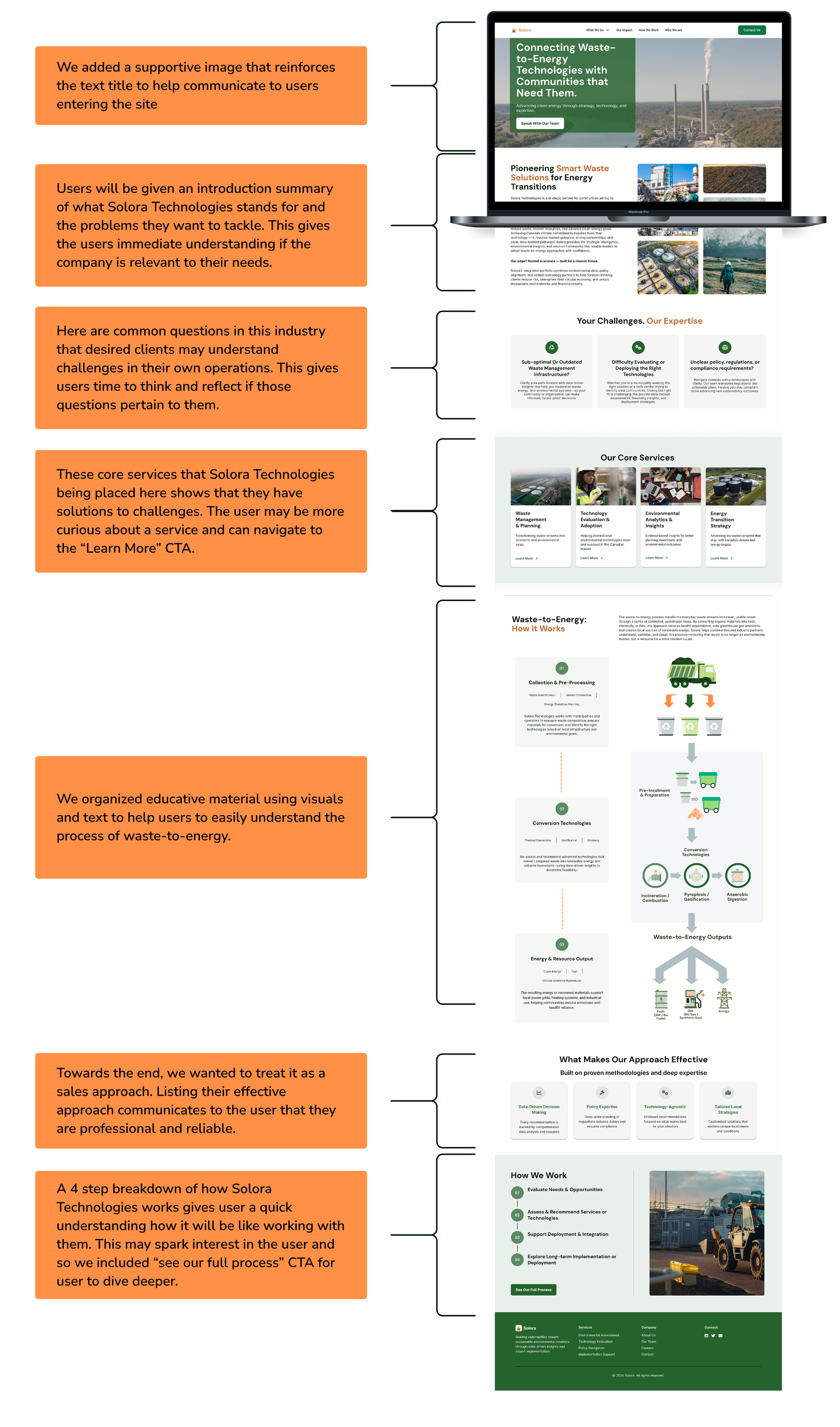
Home Page
The home page is the most critical entry point, so we strongly focused on structuring the content as a clear storytelling experience. We prioritized clear messaging at the top of the page, supported by purposeful imagery that reinforces the narrative.
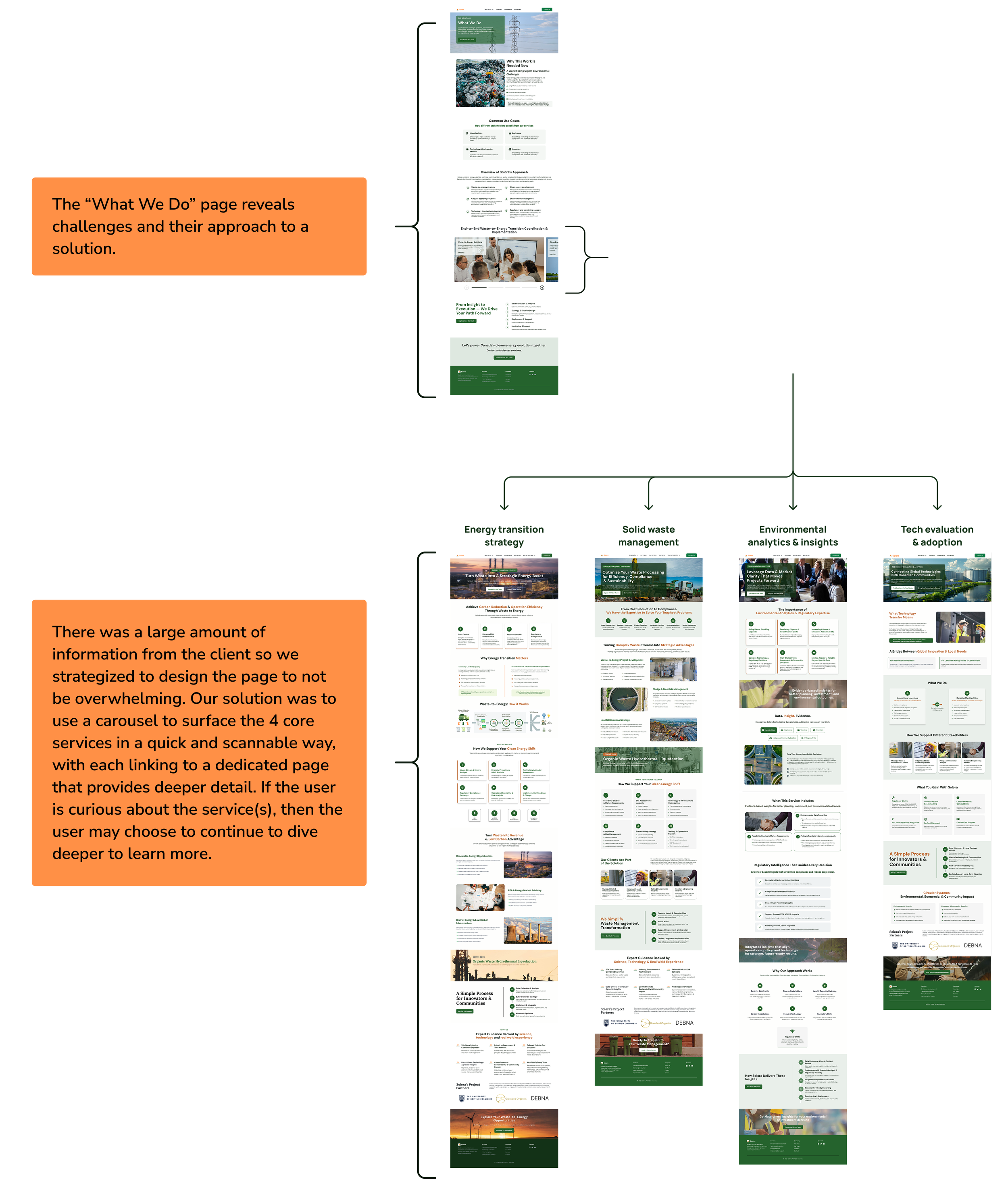
Core Services
Solora Technologies services needed to be easy for users to access and digest. Through multiple iterations and testing, we refined the layout to create a clear, intuitive flow that reduces friction.
Who they are, What they do
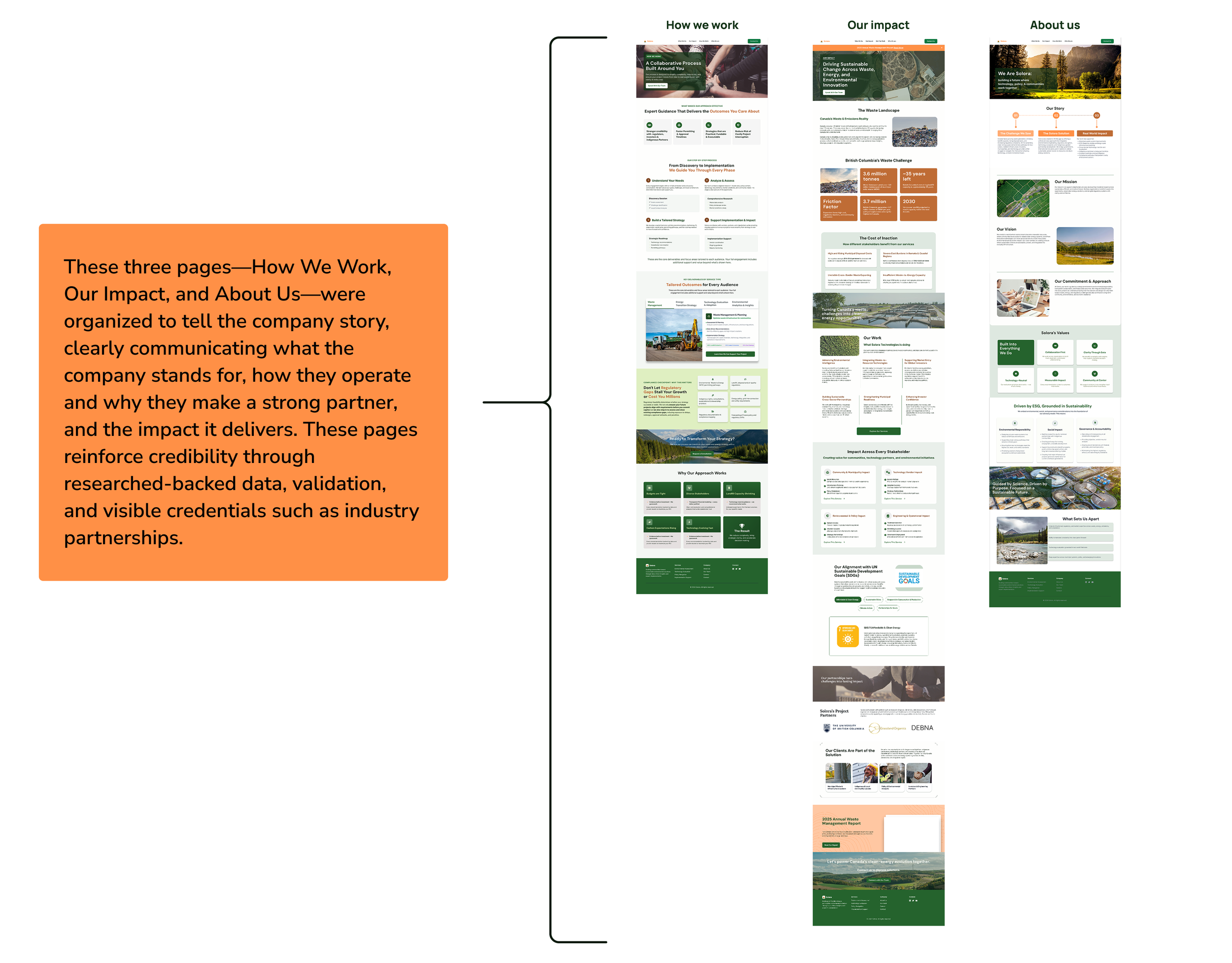
The How We Work, Our Impact, and About Us pages are similar as to have one goal in mind and is to communicate to the user why they are the right partner for the job. Organizing information with the use of cards backed with visual and
The Goal
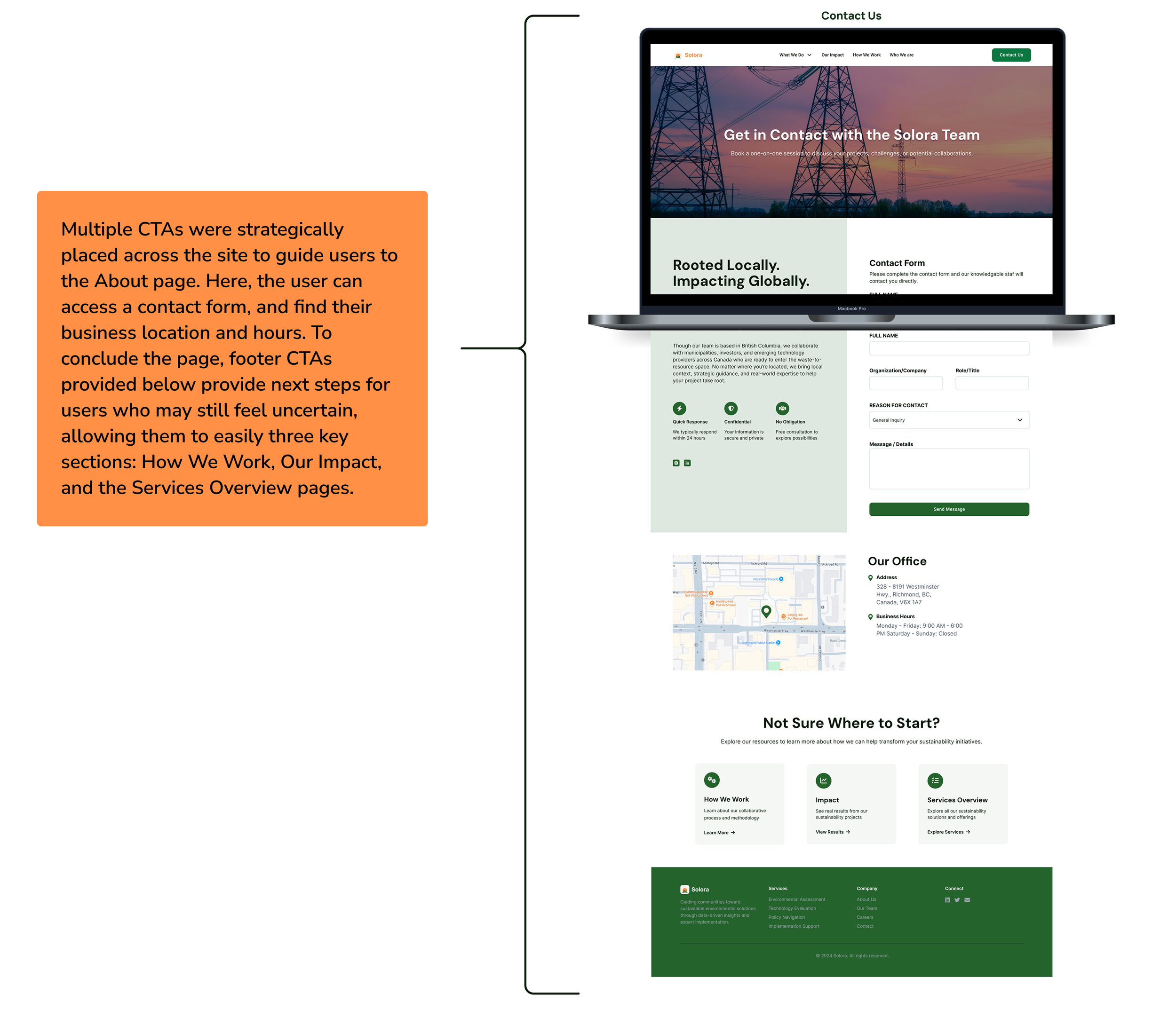
Users interested in Solora Technologies may want to get in touch with them. We added a contact page so that users may submit messages.
Key Takeaway
I learned a lot from working with others and how it is important to create a strategy before diving in. There were some things that I would have done differently in order to tackle each step in a more organized way. I saw that working with others, there were a lot more ideas to share making it easier to come up with more ideas.